
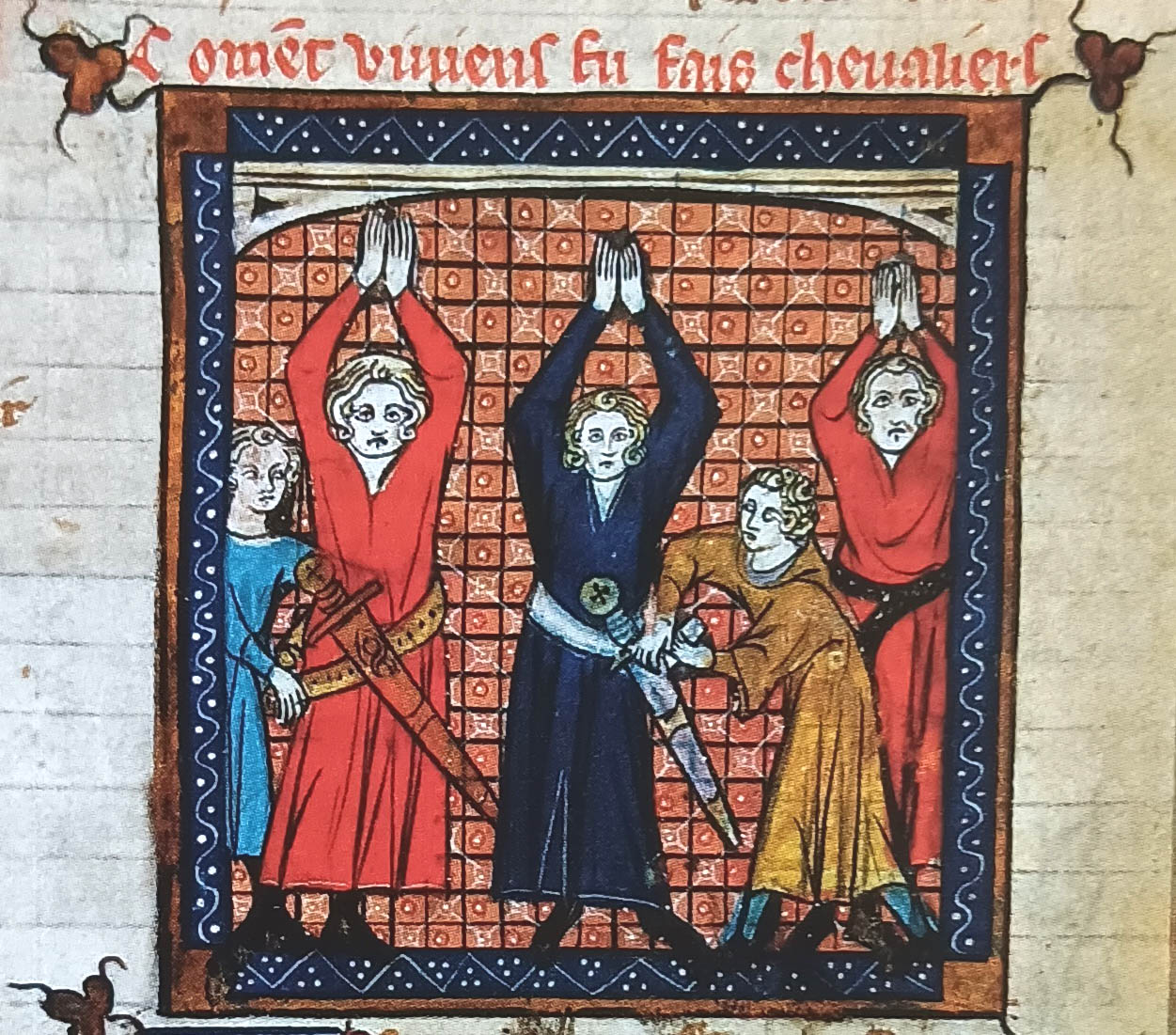
(image above) Three knights being girded by their paiges and squires, presented on this 14th Century illuminated manuscript.
From Paige to Knight: A Journey Into Medieval Chivalry.
When a medieval knight is envisaged they are often seen charging across battlefields in shining armour, sworn to honour, courage, and heroic deeds. But behind the legends we hear and see today, there was a long and demanding process of training, discipline, and societal expectation that began at childhood and shaped every aspect of a knight’s life. Becoming a knight in the Middle Ages was not simply a title awarded for bravery—it was the result of years of preparation, service, and education in both warfare and behaviour.
The Making of a Knight Begins in Childhood.
Most medieval knights were born into noble families. From an early age, boys destined for knighthood were raised with the expectation that they would serve in war and uphold their family’s reputation. Childhood in noble households was not idle; it was structured around discipline, religious instruction, and physical training.
Young boys had far more emphasis was placed on behaviour, obedience, and religious observance usually in French (if they were in England, or opposite if in France, maybe German or Spanish) and Latin, but were often taught basic literacy and numeracy, sometimes Greek and the antiquities. The Church played a major role in shaping early identity, encouraging ideals of loyalty, humility, and obedience to authority. Alongside this, children were encouraged to ride horses, hunt small game, and develop physical strength through games and outdoor activity. These early experiences laid the foundation for later military training.
Life as a Paige: Learning Court and Conduct.
Around the age of seven, a boy would typically leave his family home to serve as a Paige in the household of a noble lord or lady. This stage was less about combat and more about learning how to function within aristocratic society.
Paiges were responsible for assisting with household duties, tending the barn and horses, serving meals, delivering messages, and observing the behaviour of knights and nobles. While these tasks may seem simple, they were essential in teaching discipline, respect, and courtly etiquette, and they started before dawn and continued into the early night. A paige was expected to be polite, attentive, and obedient at all times.
Some education during this stage included music and manners, religious and tactical instruction, and basic reading and writing. Just as important was exposure to the daily rhythms of noble life—feasts, ceremonies, hunting parties, and religious observances. The paige learned not just how to serve, but how to think and act like a member of the noble class.
Becoming a Squire: The Military Apprenticeship
By the age of about fourteen, a paige would progress to becoming a squire. This marked the beginning of serious military training and direct involvement in the life of a knight.
A squire’s responsibilities were practical and physically demanding. They cared for their knight’s armour and weapons, cleaned and maintained horses, and ensured that equipment was ready for battle. On campaign, squires accompanied knights into war, carrying spare weapons and assisting in combat preparation.
This stage of training was crucial. Squires learned how real warfare functioned—not just through instruction, but through experience. They witnessed battles, sieges, and skirmishes, gradually developing the skills and confidence required for combat. Training included swordsmanship, lance handling, horsemanship, and fighting in armour, often practiced repeatedly until it became instinctive.
Perhaps most importantly, squires learned endurance. Medieval warfare was physically exhausting, and knights needed strength, stamina, and resilience. Armour was heavy, horses were expensive and temperamental, and battles were chaotic. The squire learned to function within this environment.
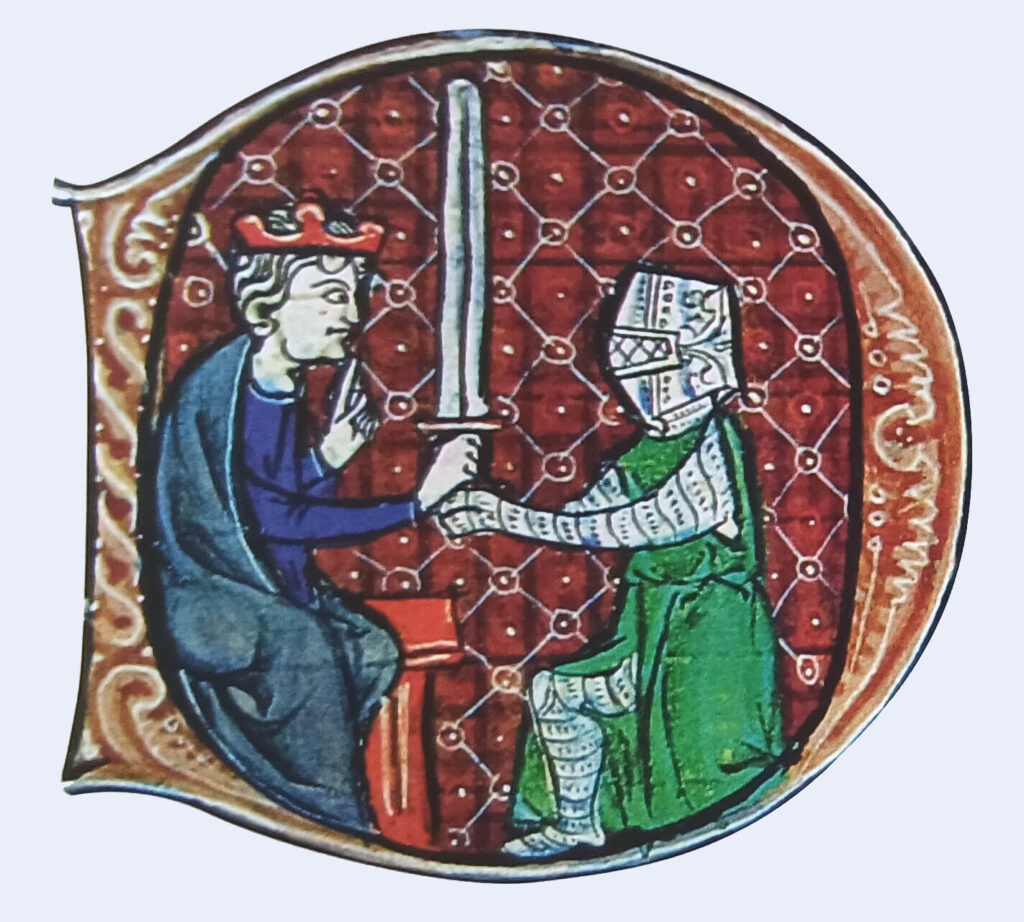
(image above) Being knighted by the King and receiving his sword, presented in this 14th Century illuminated manuscript.
The Ceremony of Knighthood.
If a squire proved capable, loyal, and mature, they could be formally made a knight. This moment was not only a military promotion but also a symbolic transformation into a new social and moral role.
The ceremony of knighthood varied across regions and centuries, but it often included religious preparation. A squire might confess their sins, attend a church service, and spend a night in prayer. This reflected the strong connection between knighthood and Christian ideals.
During the ceremony, the future knight would kneel before a lord or monarch, who would symbolically strike them on the shoulder and present them with weapons—most commonly a sword and spurs. This act represented both authority and responsibility. The new knight was now expected to uphold honour, defend the weak, serve their lord, and maintain readiness for war.
Life as a Knight: More Than Warfare.
Contrary to popular belief, knights did not spend all their time in battle. In fact, much of a knight’s life was focused on managing estates, fulfilling administrative duties, and maintaining their household.
Many knights were landowners, responsible for overseeing agriculture, collecting rents, and managing workers. They acted as local authorities, settling disputes and maintaining order in their region. This made them both military figures and political administrators.
Training never stopped. Knights regularly practiced combat skills, hunted for sport and training, and participated in tournaments. These tournaments were not only entertainment but also serious training events where knights could demonstrate skill, gain reputation, and earn rewards.
Religious life was also central. Knights were expected to attend church regularly, support religious institutions, and live according to Christian moral expectations. While reality often fell short of ideals, religion remained a powerful influence on how knights were guided and performed their role in society.
Warfare, Honour, and Reality.
When called to war, knights formed the backbone of medieval armies. They fought in battles, led cavalry charges, defended castles, and took part in sieges. Warfare was brutal and often chaotic, and survival depended on training, discipline, and luck as much as bravery.
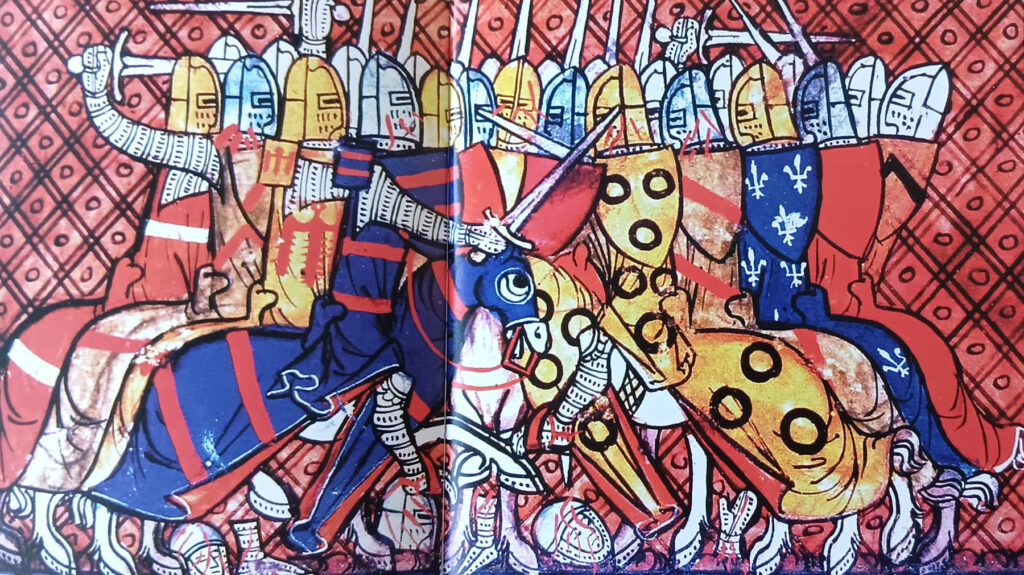
(image above) Knights in heavy cavalry combat with their shield depicting their titles and allegiances’, presented in this 13th Century illuminated manuscript.
Captured knights were often held for ransom, turning warfare into both a military and financial system. Honour played a significant role in determining behaviour on the battlefield, but practical concerns—such as wealth, loyalty, and survival—were equally important.
The idea of chivalry developed to shape knightly conduct, promoting ideals such as courage, loyalty, generosity, and protection of the weak. However, again, the reality of medieval warfare often conflicted with these ideals. Knights could be ruthless in battle while still maintaining a reputation for honour within their own social code, especially during the crusades.
The Legacy of the Medieval Knight.
Over time, the role of the knight changed. By the late Middle Ages, developments in infantry tactics, longbows, and gunpowder began to reduce the dominance of heavily armoured cavalry. However, the cultural legacy of knighthood endured.
The knight became a symbol of honour, nobility, and heroic warfare—an image that has persisted in literature, film, and popular culture for centuries. Yet behind the legend lies a far more complex reality: a life shaped by discipline, training, responsibility, and social expectation from childhood to adulthood.
Understanding the true journey of a knight reveals not only how medieval warfare functioned, but how deeply structured medieval society was. Knighthood was not simply a role—it was a lifelong identity built through years of preparation and service.
Further References to Examine.
Introduction to Medieval Europe, 300-1500, 2nd Ed., Blockmans and Hoppenbrouwers
New Cambridge Medieval History, Vols. 1-7, c300 – c1500, 2008, Luscombe & Riley-Smith
The Historical Atlas of Knights and Castles, 2007, Dr Ian Barnes
The Oxford Illustrated History of Medieval Europe, 1988, edited by George Holmes